17
February, Phnom Penh, 11km
#10 Lakeside Guesthouse 32,000KHR
($8)
We spent
a depressing morning at Phnom Penh’s Tuol Sleng Genocide Museum. “The site is a
former high school which was used as the notorious Security Prison 21 (S-21) by
the Khmer Rouge regime from its rise to power in 1975 to its fall in 1979.”
S-21 was one of around 150 torture and execution centres in Cambodia under Pol
Pot.* As many as 20,000 prisoners passed through S-21, many thousands killed
either there or at one of the infamous “killing fields”. On display are
instruments of torture, tiny horror cells, and photographs of the victims.
Although the museum is in desperate need of a skilled curator, it manages to
move and horrify. I have posted two verbatim internet extracts below about Pol
Pot and his murderous regime.
* historyplace.com: “An attempt by Khmer Rouge
leader Pol Pot to form a Communist peasant farming society resulted in the deaths
of 25 percent of the country’s population from starvation, overwork and
executions.
Pol Pot
was born in 1925 (as Saloth Sar) into a farming family in central Cambodia,
which was then part of French Indochina. In 1949, at age 20, he traveled to
Paris on a scholarship to study radio electronics but became absorbed in
Marxism and neglected his studies. He lost his scholarship and returned to
Cambodia in 1953 and joined the underground Communist movement. The following
year, Cambodia achieved full independence from France and was then ruled by a
royal monarchy.
By 1962,
Pol Pot had become leader of the Cambodian Communist Party and was forced to
flee into the jungle to escape the wrath of Prince Norodom Sihanouk, leader of
Cambodia. In the jungle, Pol Pot formed an armed resistance movement that
became known as the Khmer Rouge (Red Cambodians) and waged a guerrilla war
against Sihanouk's government.
In 1970,
Prince Sihanouk was ousted, not by Pol Pot, but due to a U.S.-backed right-wing
military coup. An embittered Sihanouk retaliated by joining with Pol Pot, his
former enemy, in opposing Cambodia's new military government. That same year,
the U.S. invaded Cambodia to expel the North Vietnamese from their border
encampments, but instead drove them deeper into Cambodia where they allied
themselves with the Khmer Rouge.
From 1969
until 1973, the U.S. intermittently bombed North Vietnamese sanctuaries in
eastern Cambodia, killing up to 150,000 Cambodian peasants. As a result,
peasants fled the countryside by the hundreds of thousands and settled in
Cambodia's capital city, Phnom Penh.
All of
these events resulted in economic and military destabilization in Cambodia and
a surge of popular support for Pol Pot.
By 1975,
the U.S. had withdrawn its troops from Vietnam. Cambodia's government, plagued
by corruption and incompetence, also lost its American military support. Taking
advantage of the opportunity, Pol Pot's Khmer Rouge army, consisting of teenage
peasant guerrillas, marched into Phnom Penh and on April 17 effectively seized
control of Cambodia.
Once in
power, Pol Pot began a radical experiment to create an agrarian utopia inspired
in part by Mao Zedong's Cultural Revolution which he had witnessed first-hand
during a visit to Communist China.
Mao's
"Great Leap Forward" economic program included forced evacuations of
Chinese cities and the purging of "class enemies." Pol Pot would now
attempt his own "Super Great Leap Forward" in Cambodia, which he
renamed the Democratic Republic of Kampuchea.
He began
by declaring, "This is Year Zero," and that society was about to be
"purified." Capitalism, Western culture, city life, religion, and all
foreign influences were to be extinguished in favor of an extreme form of
peasant Communism.
All
foreigners were thus expelled, embassies closed, and any foreign economic or
medical assistance was refused. The use of foreign languages was banned.
Newspapers and television stations were shut down, radios and bicycles
confiscated, and mail and telephone usage curtailed. Money was forbidden. All
businesses were shuttered, religion banned, education halted, health care
eliminated, and parental authority revoked. Thus Cambodia was sealed off from
the outside world.
All of
Cambodia's cities were then forcibly evacuated. At Phnom Penh, two million
inhabitants were evacuated on foot into the countryside at gunpoint. As many as
20,000 died along the way.
Millions
of Cambodians accustomed to city life were now forced into slave labor in Pol
Pot's "killing fields" where they soon began dying from overwork,
malnutrition and disease, on a diet of one tin of rice (180 grams) per person
every two days.
Workdays
in the fields began around 4 a.m. and lasted until 10 p.m., with only two rest
periods allowed during the 18 hour day, all under the armed supervision of
young Khmer Rouge soldiers eager to kill anyone for the slightest infraction.
Starving people were forbidden to eat the fruits and rice they were harvesting.
After the rice crop was harvested, Khmer Rouge trucks would arrive and
confiscate the entire crop.
Ten to
fifteen families lived together with a chairman at the head of each group. All
work decisions were made by the armed supervisors with no participation from
the workers who were told, "Whether you live or die is not of great
significance." Every tenth day was a day of rest. There were also three
days off during the Khmer New Year festival.
Throughout
Cambodia, deadly purges were conducted to eliminate remnants of the "old
society" - the educated, the wealthy, Buddhist monks, police, doctors,
lawyers, teachers, and former government officials. Ex-soldiers were killed
along with their wives and children. Anyone suspected of disloyalty to Pol Pot,
including eventually many Khmer Rouge leaders, was shot or bludgeoned with an
ax. "What is rotten must be removed," a Khmer Rouge slogan
proclaimed.
In the
villages, unsupervised gatherings of more than two persons were forbidden.
Young people were taken from their parents and placed in communals. They were
later married in collective ceremonies involving hundreds of often-unwilling couples.
Up to
20,000 persons were tortured into giving false confessions at Tuol Sleng, a
school in Phnom Penh which had been converted into a jail. Elsewhere, suspects
were often shot on the spot before any questioning.
Ethnic
groups were attacked including the three largest minorities; the Vietnamese,
Chinese, and Cham Muslims, along with twenty other smaller groups. Fifty
percent of the estimated 425,000 Chinese living in Cambodia in 1975 perished.
Khmer Rouge also forced Muslims to eat pork and shot those who refused.
On
December 25, 1978, Vietnam launched a full-scale invasion of Cambodia seeking
to end Khmer Rouge border attacks. On January 7, 1979, Phnom Penh fell and Pol
Pot was deposed. The Vietnamese then installed a puppet government consisting
of Khmer Rouge defectors.
Pol Pot
retreated into Thailand with the remnants of his Khmer Rouge army and began a
guerrilla war against a succession of Cambodian governments lasting over the
next 17 years. After a series of internal power struggles in the 1990s, he
finally lost control of the Khmer Rouge. In April 1998, 73-year-old Pol Pot
died of an apparent heart attack following his arrest, before he could be
brought to trial by an international tribunal for the events of 1975-79.”
worldwithoutgenocide.org: “Under threat of death,
Cambodians nationwide were forced from their hometowns and villages. The ill,
disabled, old and young who were incapable of making the journey to the
collectivized farms and labor camps were killed on the spot. People who refused
to leave were killed, along with any who appeared to be in opposition to the
new regime. The people from entire cities were forcibly evacuated to the
countryside. All political and civil rights of the citizen were abolished.
Children were taken from their parents and placed in separate forced labor
camps. Factories, schools, universities, hospitals, and all other private
institutions were shut down; all their former owners and employees were
murdered, along with their extended families. Religion was also banned: leading
Buddhist monks and Christian missionaries were killed, and temples and churches
were burned. While racist sentiments did exist within the Khmer Rouge, most of
the killing was inspired by the extremist propaganda of a militant communist
transformation. It was common for people to be shot for speaking a foreign
language, wearing glasses, smiling, or crying. One Khmer slogan best
illuminates Pol Pot’s ideology: “To spare you is no profit, to destroy you is
no loss.” Cambodians who survived the purges and marches became unpaid
laborers, working on minimum rations for endless hours. They were forced to
live in public communes, similar to military barracks, with constant food
shortages and diseases running rampant. Due to conditions of virtual slave labor,
starvation, physical injury, and illness, many Cambodians became incapable of
performing physical work and were killed off by the Khmer Rouge as expenses to
the system. These conditions of genocide continued for three years until
Vietnam invaded Cambodia in 1978 and ousted the Khmer Rouge government. To this
point, civilian deaths totaled well over 2 million.”
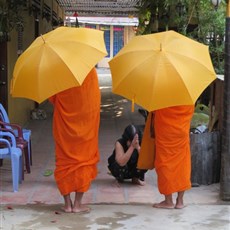
Phnom Penh - monks
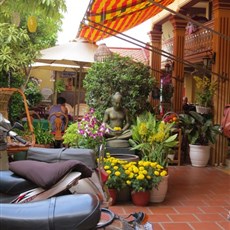
#10 Lakeside
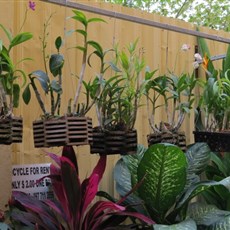
#10 Lakeside
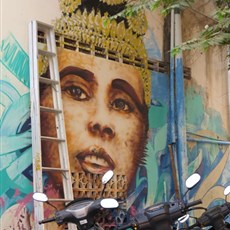
Phnom Penh
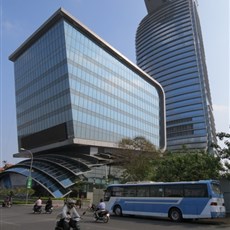
Phnom Penh
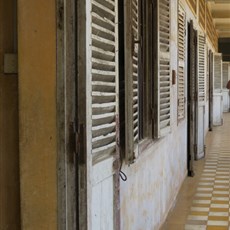
Tuol Sleng Genocide Museum - Phnom Penh
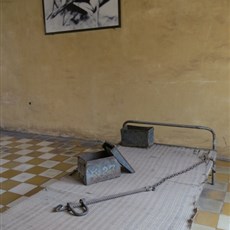
Tuol Sleng Genocide Museum - Phnom Penh
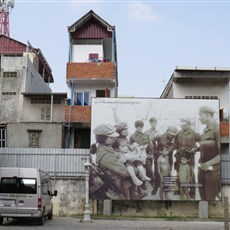
Tuol Sleng Genocide Museum - Phnom Penh
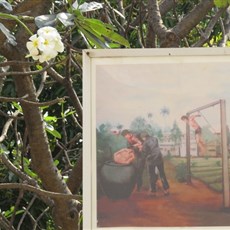
Tuol Sleng Genocide Museum - Phnom Penh
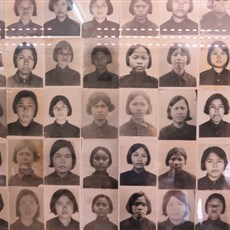
Tuol Sleng Genocide Museum - Phnom Penh
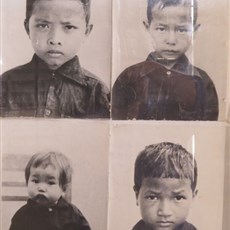
Tuol Sleng Genocide Museum - Phnom Penh
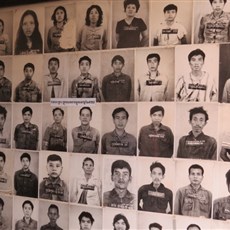
Tuol Sleng Genocide Museum - Phnom Penh
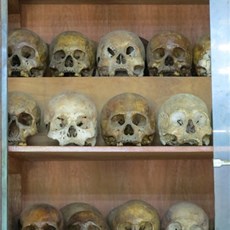
Tuol Sleng Genocide Museum - Phnom Penh